
How Do Staffing Agencies Work in Boston?

Hiring in Boston brings unique challenges depending on your industry, location, and the roles you’re trying to fill. Whether you’re recruiting for skilled trades in manufacturing, technical roles in engineering, or leadership positions across departments, finding qualified talent takes time and resources many internal teams do not have. That is where staffing agencies come in.
Working with a staffing agency in Boston gives you access to a pipeline of pre-screened candidates, market insight, and recruiting systems already built for speed and accuracy. You are partnering with a team that understands Boston’s labor market and hiring landscape. In Boston, staffing support gives you more control over outcomes while reducing the time spent on hiring logistics.
Understanding the Staffing Process with a Staffing Agency
Working with a staffing agency should be direct and outcome-driven. The process helps reduce delays, maintain productivity, and align hiring with operational goals. Each step serves a specific purpose, giving you more control over results without adding to your internal workload.
Below is a clear breakdown of how the staffing process works from start to finish:
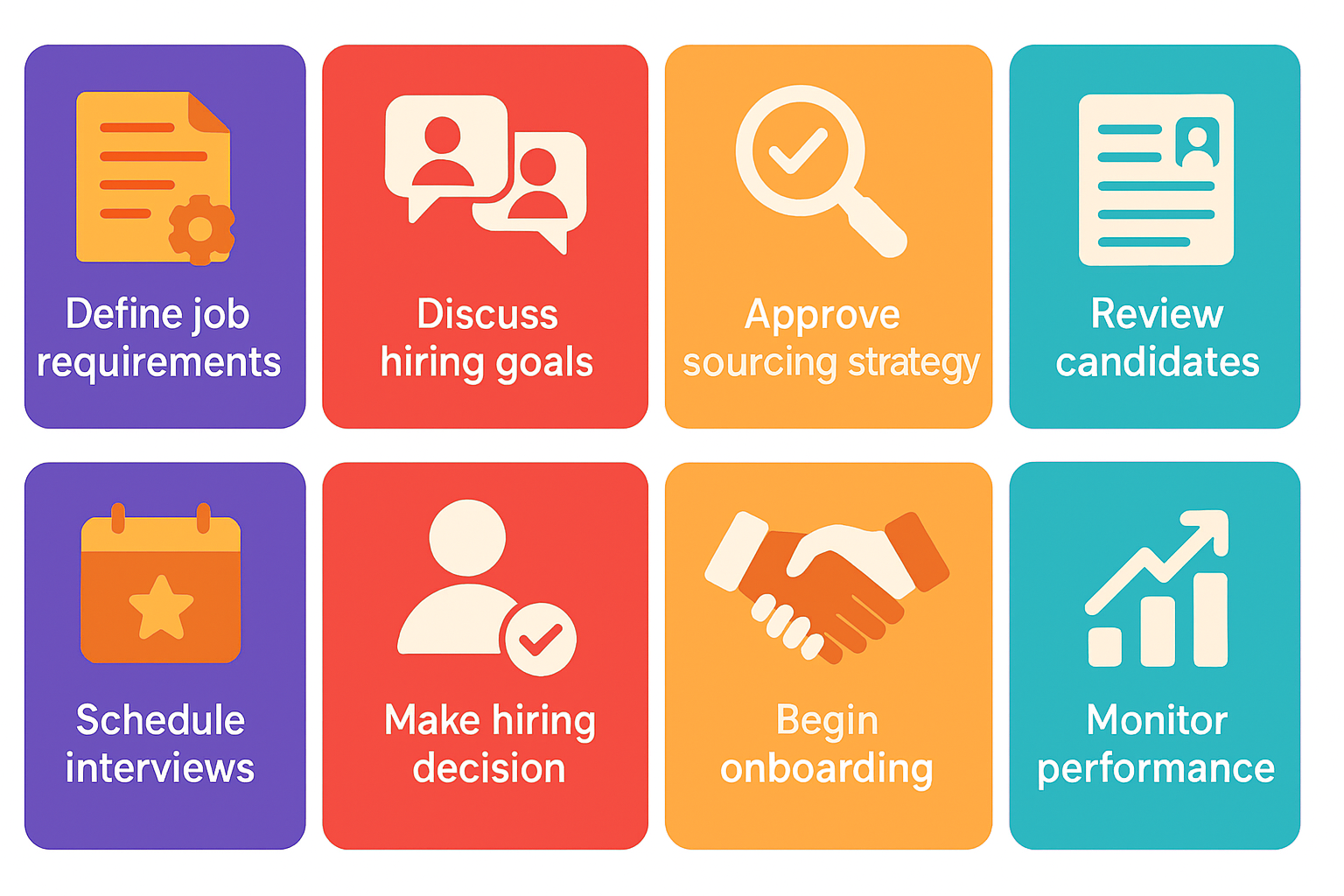
Step 1: Define the Job Requirements:
Start with a clear definition of the role. You need more than just a job title or basic summary. Define what success looks like, what skills are required, and how the role contributes to your team. Without clarity here, the search will drift. Precise role definition creates the foundation for a faster, more focused hiring process that delivers stronger results.
What to consider:
- Core responsibilities and daily tasks
- Required technical skills or certifications
- Team structure and reporting lines
Defining the job helps reduce back-and-forth later. It gives your staffing partner a framework that supports faster screening and better matches. Candidates are evaluated with the right context, which means less time wasted and a higher chance of long-term success. Role clarity up front makes the entire process more effective.
Step 2: Discuss Hiring Goals and Timelines
Once the job is defined, shift the conversation to goals and timelines. Clarify what you need from the agency, such as permanent placement or temporary staffing. Identify any internal deadlines, project dependencies, or seasonal peaks that affect timing. Aligning expectations early helps the staffing agency prioritize sourcing and adjust the search based on urgency and volume.
What to consider:
- Expected start date or deadlines
- Number of positions to fill
- Long-term vs short-term placement needs
Clear hiring goals guide the staffing agency’s strategy. When timelines are realistic and priorities are defined, you avoid unnecessary delays and missed opportunities. Candidates are submitted with purpose, and the overall process moves faster. You get the right hire at the right time without sacrificing quality or slowing internal operations.
Step 3: Determine the Best Candidate Sourcing Strategy
Once the job and hiring timeline are clear, the next step is choosing how to source candidates. The right permanent or temporary staffing strategy depends on the role, availability of local talent, and your expectations. You need to decide whether to focus on active job seekers, passive professionals, or a combination of both. It impacts speed, candidate quality, and overall success.
What to consider:
- Skill level and specialization
- Availability of local talent
- Industry demand and competition
Targeted sourcing reduces wasted time and improves the quality of candidate submissions. When the staffing agency understands where to search and how to approach candidates, the effort becomes more focused. Instead of relying on volume, the process shifts toward precision. You get better matches, fewer interviews, and faster placement with the right fit.
Step 4: Review And Select Qualified Candidates
Once candidates are sourced, it’s time to review qualifications and select who moves forward. Evaluate each submission based on job-specific criteria, not just general strengths. Look for skill, work history, and readiness to contribute. Your feedback shapes the next round of candidates, so clarity at this stage helps avoid repeated reviews and keeps the hiring process moving efficiently.
What to consider:
- Alignment with core job requirements
- Relevant industry experience
- Availability and start date
Strong communication leads to better outcomes. Provide specific notes on what worked or didn’t in each submission. It gives the staffing agency the detail needed to refine their search. When selection criteria are consistent, the process moves faster, reduces wasted interviews, and leads to more successful placements that meet long-term goals.
Step 5: Schedule And Conduct Interviews
Interviews give you the chance to assess communication, decision-making, and role alignment. The staffing agency handles scheduling, confirms availability, and provides candidate preparation based on your format. Share interview details, format preferences, and expected outcomes in advance.
What to consider:
- Interview format and structure
- Internal team participation
- Timing relative to hiring goals
Interviews also give candidates a look at how you operate. A rushed or disorganized experience can turn strong candidates away. Candidates form opinions based on how they are treated during each step. A well-run interview shows respect for their time and confirms your team takes hiring seriously. The impression you leave can shape who accepts your offer.
Step 6: Make A Hiring Decision
Once interviews are complete, it is time to choose the right candidate. The staffing agency collects feedback and helps you compare final options. You make the hiring decision, but you do not have to manage every detail. With a clear summary from the agency, you can move quickly and avoid losing qualified candidates to competing offers.
What to consider:
- Candidate availability and start date
- Alignment with role requirements
- Feedback from internal interviewers
The decision point is where momentum matters. The staffing agency can help handle negotiations, clarify terms, and prepare next steps. You stay in control of the final call, but you are not doing it alone. A fast, well-informed decision protects candidate interest and keeps the hiring process aligned with your original goals.
Step 7: Begin Onboarding And Placement
Once the offer is accepted, onboarding should begin right away. The hiring agency confirms the start date, finalizes paperwork, and makes sure the candidate knows what to expect. You handle access, internal communication, and any company-specific setup. When both sides stay in sync, the first day runs smoothly and the new hire can focus on getting up to speed.
What to consider:
- First-day instructions and contacts
- Access to tools or systems
- Clarity on job responsibilities
A good first day depends on more than just preparation. The way you welcome someone sends a message about how the team operates. Candidates placed through a staffing agency still look to you for direction. Give them the structure they need. Answer questions early and set a tone that encourages confidence, clarity, and follow-through from the start.
Step 8: Monitor Performance And Provide Feedback
A placement doesn’t end once the employee starts. You still need to watch how they perform and address anything that could get in the way of results. The employment agency stays involved after the start date. Regular check-ins help identify issues early. You can confirm the employee is meeting expectations and make sure nothing is slipping through the cracks.
What to consider:
- Early job performance
- Communication between all parties
- Alignment with original job goals
If the employee is underperforming or exceeding expectations, share that with the staffing agency. You’re not managing performance alone. Honest feedback helps adjust the placement or strengthen what is already working. A quick course correction now can prevent bigger problems later. The more the agency knows, the more useful the support becomes throughout the rest of the assignment.
Simplify and Strengthen Your Staffing Process With VSG
Outsourcing your hiring to a staffing agency in Boston helps your process go smoother. You can source the candidates you want and build a more productive, long-lasting team. Vector Search Group offers temporary staffing, temp to hire, and permanent placement services in Boston. Find out how our staffing process works and let us help you hire qualified candidates in the engineering and executive fields.
We Want To Hear From You
We recruit heavily in AM and retail fixtures & POP. If you’re an expert in either field, let’s start a conversation.